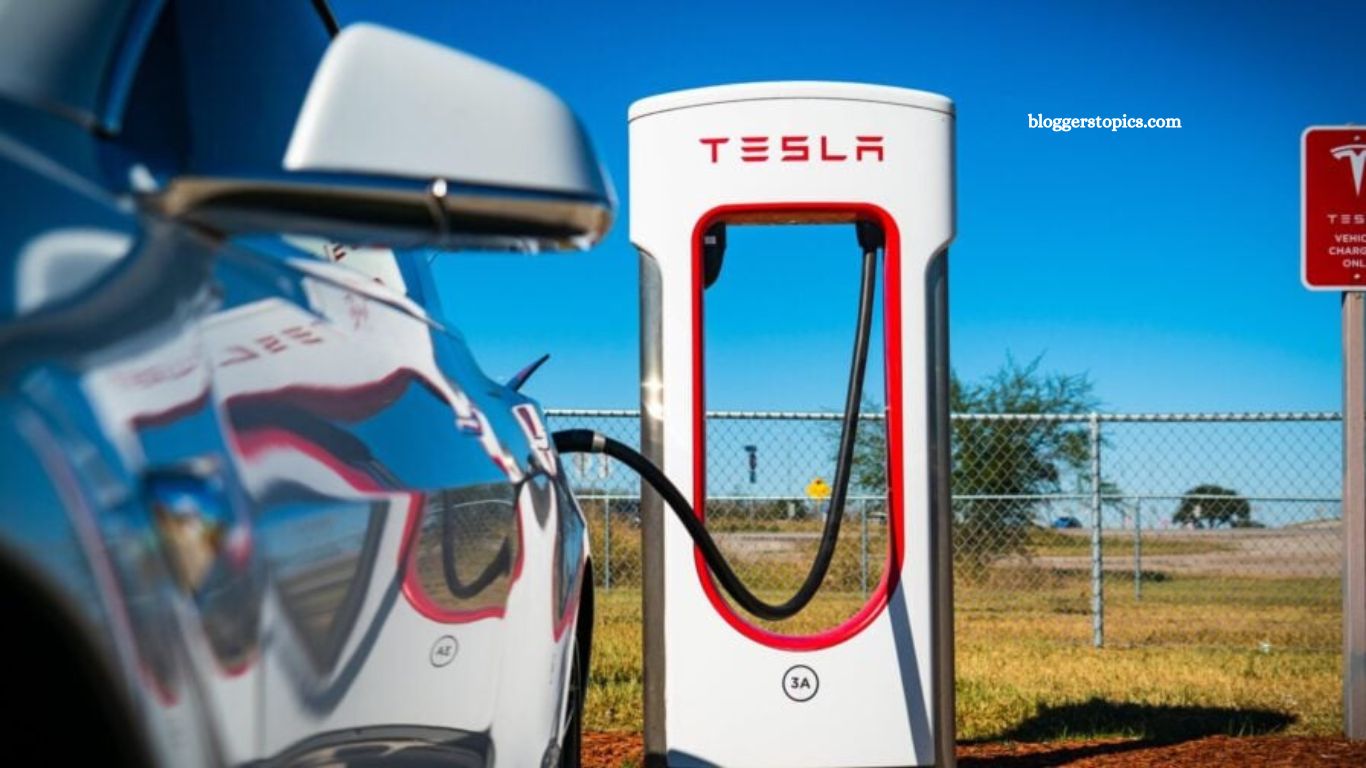

Charging your electric vehicle might be greener for the planet, but it could carry hidden risks for your health. A recent UCLA study found that the air around fast-charging stations contained nearly double the concentration of harmful fine particles compared to typical urban air. Researchers measured 50 charging sites across the Los Angeles area many of them Tesla Superchargers and detected particulate matter levels ranging from 15 to 20 micrograms per cubic meter.
For comparison, average city air in Los Angeles contains about 7 to 8 micrograms, while gas stations average around 12. Alarmingly, about half of the chargers tested exceeded the World Health Organization’s recommended air quality limits. Tesla has yet to comment on the findings.
Read More: Nancy Mace Aligns with Hertz Amid AI Scanner Controversy
Why is this a concern?
While electric vehicles are often promoted as a cleaner alternative to gasoline, the growing network of high-speed charging stations may be unintentionally introducing new air quality risks. Across the United States, there are now more than 11,400 high-speed charging sites, according to Bloomberg’s analysis of U.S. Department of Energy data. Over 700 were added in just the second quarter of 2025, with hundreds more expected by 2026.
Researchers believe the issue stems from the design of the chargers themselves. Powerful fans expel air directly around the charging area, stirring up dust, tire residue, and other fine particles that users may inhale. “We want to make sure that EV adoption is clean,” said Yuan Yao, co-author of the UCLA study.
How can you reduce exposure to pollution at EV chargers?
Fortunately, avoiding harmful emissions from fast-charging stations may be easier than it sounds. According to environmental health professor Yifang Zhu, who led the UCLA study, air quality improves significantly with distance. “We measured at different distances from the chargers, and the highest concentrations were near the power cabinets,” Zhu explained. “Just a few meters away, the levels drop sharply. A few hundred meters away, there’s no noticeable difference from normal background air.”
The study, Fine Particulate Matter Emissions from Electric Vehicle Fast Charging Stations, highlights that EV drivers can immediately protect themselves by simply stepping back while charging. Co-author Yuan Yao emphasized that as EV infrastructure expands, safety considerations must extend to the chargers themselves.
Experts caution that no amount of fine particulate matter is entirely safe to inhale. With concentrations near chargers measuring roughly twice as high as average urban air—and elevated traces of metals from brakes and tires—the safest approach is keeping distance whenever possible.
Gas is still far worse for the environment
Despite the concerns raised about particulate emissions from EV charging stations, experts stress that gasoline-powered vehicles remain a far greater health and environmental hazard. Traditional cars emit benzene, carcinogenic compounds, volatile organic chemicals, and a host of other pollutants, according to the Environmental Protection Agency. These emissions not only degrade local air quality but also contribute significantly to climate change.
Joe Allen, an air quality expert and professor at Harvard’s T.H. Chan School of Public Health, underscored this perspective in an interview with the Los Angeles Times. “I’d much rather be charging my EV than filling my gas-powered car at the gas station,” he said, noting that electric vehicles still represent a much cleaner option overall.
Frequently Asked Questions (FAQs)
Do EV charging stations cause pollution?
Yes, recent research shows that fast-charging stations can release fine particulate matter into the surrounding air. These particles mainly come from dust, tire residue, and other debris stirred up by the cooling fans in the chargers.
Is charging an EV worse than refueling a gas car?
No. While fast chargers may increase localized air pollution, gasoline vehicles and gas stations release far more harmful emissions, including benzene and other carcinogens. Experts agree EVs remain the cleaner option overall.
How can I reduce my exposure while charging?
Stand a few meters away from the power cabinets when plugging in your car, avoid lingering near the charger, and choose outdoor or well-ventilated charging locations whenever possible.
Do EV chargers exceed air quality guidelines?
In the UCLA study, about half of the chargers tested exceeded World Health Organization guidelines for fine particulate matter. However, concentrations dropped sharply just a few meters away.
Will this issue get worse as more chargers are built?
Not necessarily. Researchers note that the problem is linked to charger design. With better ventilation systems and technology upgrades, future stations could minimize particle emissions significantly.
Conclusion
The UCLA study raises important questions about the unintended health effects of electric vehicle fast-charging stations. While these chargers can temporarily increase levels of fine particulate matter in their immediate surroundings, the risks diminish quickly with distance and are far less severe than the well-documented hazards of gasoline emissions. Experts agree that EVs remain a cleaner, safer choice for both human health and the environment, especially when compared to gas-powered cars.