
A poorly maintained industrial dust collector does not simply underperform — it creates compounding operational and compliance problems. Filter blinding reduces airflow, causing capture velocity at extraction hoods to drop below OSHA-required minimums. Leaking hopper seals allow collected dust to re-entrain into the airstream, rendering the system counterproductive. Worn pulse valves consume 30–60% more compressed air than new valves while delivering inadequate filter cleaning. An estimated 65% of dust collector efficiency losses are attributable to inadequate preventative maintenance for dust collectors, not equipment design failures.
This checklist consolidates the critical maintenance tasks across four intervals — daily, monthly, quarterly, and annual — into a structured schedule that protects both equipment longevity and regulatory compliance.
Daily Checks (5–10 Minutes)
Daily monitoring catches developing problems before they become costly failures. These checks require no tools and can be integrated into operator startup and shutdown routines:
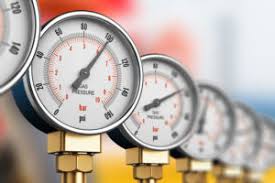
• Differential pressure (ΔP) reading: check the magnehelic or digital ΔP gauge at the collector. Normal range: 3.0–6.0 in. w.c. for pulse-jet baghouse; 1.5–4.0 in. w.c. for cartridge collectors. A reading above the high setpoint indicates filter blinding; a sudden drop of > 2 in. w.c. indicates possible filter failure.
• Hopper level inspection: visually check hopper fill level or check the hopper level indicator. A full hopper not only stops collecting dust — the backed-up material can re-entrain through the filter media and block rotary airlocks.
• Compressed air header pressure: verify supply pressure to pulse-jet cleaning manifold reads 90–100 psi. Pressure below 80 psi produces inadequate cleaning pulses; above 110 psi risks filter bag stress fatigue.
• Fan motor status: listen for unusual noise (bearing rumble, impeller rub, belt squeal). Note any abnormal vibration at the fan base. These are early indicators of imminent mechanical failure.
| Maintenance Task | Frequency | Normal Parameter | Action if Out of Range |
| ΔP reading | Daily | 3.0–6.0 in. w.c. (baghouse) | Inspect filters; check cleaning system |
| Hopper level check | Daily | < 75% full | Empty immediately; check discharge valve |
| Compressed air pressure | Daily | 90–100 psi at manifold | Check compressor, regulator, supply line |
| Fan motor noise/vibration | Daily | Smooth, no unusual sound | Schedule bearing inspection immediately |
| Pulse valve solenoid function | Weekly | Audible click each cycle | Replace suspect solenoid valve ($15–$40) |
| Filter ΔP trend review | Weekly | Stable or slow rise | Accelerating rise = investigate inlet loading |
Monthly Inspection Tasks
• Inspect hopper and discharge system: remove any bridged material at the hopper cone. Check rotary airlock or dump valve for wear, proper sealing, and correct rotation speed. A leaking airlock is the single most common cause of hopper re-entrainment.
• Clean compressed air manifold moisture trap: pulse-jet cleaning systems generate moisture condensation in the compressed air line. Drain accumulated water weekly in high-humidity environments, monthly in dry climates. Water in pulse air lines corrodes solenoid valves and causes clumping of filter cake.
• Inspect ductwork access doors and seals: check all access doors, inspection ports, and cleanout ports for gasket condition. Air leaks at these points reduce system airflow and allow uncollected dust to bypass the filter media.
• Check fan belt tension and condition (belt-drive units): proper belt tension deflects 0.5–0.75 inch under moderate finger pressure. Cracked, glazed, or frayed belts require immediate replacement before failure — a broken belt at full load can damage both the motor and the fan shaft.
Quarterly Maintenance Tasks
Quarterly baghouse inspection and servicing tasks address wear items that develop on a 3-month timescale:
• Pulse valve and diaphragm inspection: remove and inspect each pulse valve diaphragm for cracks, tears, or hardening. Worn diaphragms reduce pulse intensity by 30–50%, leading to inadequate filter cleaning and premature bag blinding. Diaphragm kits cost $8–$25 each — far less than the filter bags they protect.
• Filter bag/cartridge visual inspection: enter the clean-air plenum (after lockout-tagout) and visually inspect each filter element for holes, tears, collapsed bags, or dust breakthrough. Use a flashlight at the tubesheet — any light visible around a bag snap-ring indicates a failed seal.
• Fan impeller inspection: check for dust buildup on impeller blades, corrosion pitting, or erosion. Impeller imbalance from uneven buildup causes vibration that can damage bearings within weeks.
Annual Comprehensive Service
Annual service addresses structural and mechanical components with longer wear cycles:
| Annual Task | Specification | Replacement Cost if Neglected | Service Time |
| Full filter bag/cartridge replacement (if ΔP endpoint reached) | Replace all, not spot replacements | $3,000–$18,000 per set | 4–16 hours |
| Bearing lubrication and inspection | Per OEM specs; replace if > 70% life consumed | $400–$2,500 per bearing set | 2–6 hours |
| Housing interior corrosion inspection | Check welds, hopper joints, inlet flange | $800–$8,000 if allowed to perforate | 2–4 hours |
| Explosion vent panel inspection (combustible dust) | Check for corrosion, deformation, gasket integrity | $200–$800 per panel to replace | 1–2 hours |
| Full system airflow verification (pitot traverse) | Compare to design CFM; investigate > 10% deviation | $500–$2,000 for diagnosis and correction | 4–8 hours |
A documented preventative maintenance for dust collectors program — with signed checklists archived for a minimum of 3 years — provides OSHA audit protection and measurable equipment ROI. Facilities with structured PM programs report 30–45% lower annual collector operating costs compared to reactive-only maintenance approaches, according to the Association of Iron and Steel Technology’s 2022 equipment reliability survey.