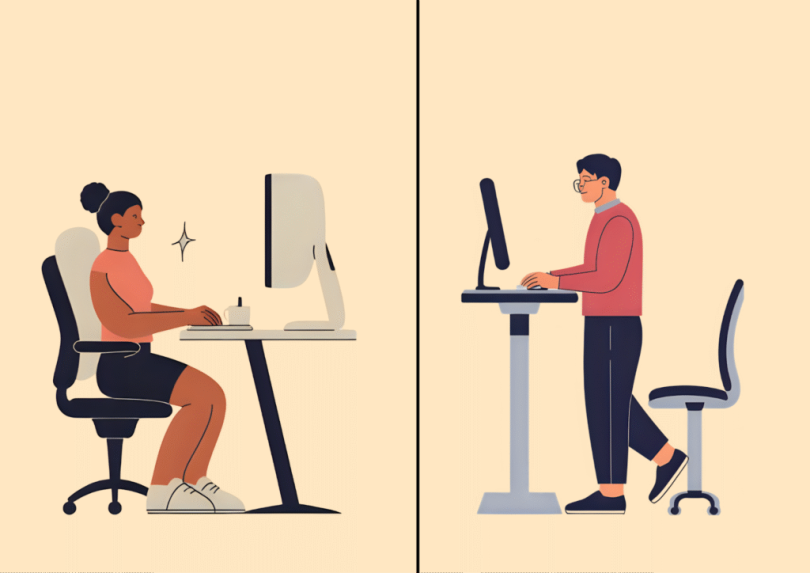

Most of us spend the better part of our lives hunched over something. Whether it is a laptop, a smartphone, or a steering wheel, the modern world seems designed to pull our shoulders forward and round our spines. Over time, this does more than just make us look tired. It leads to chronic neck pain, headaches, and a general feeling of stiffness that is hard to shake off.
Choosing between them is not always straightforward. One is a wearable device that physically pulls you into place, while the other is a piece of furniture meant to change how you work. To help you decide which path to take, we are going to break down how they work, the pros and cons of each, and which might be the best fit for your specific lifestyle.
Understanding the Posture Corrector Belt
A posture corrector belt is essentially a harness. It usually fits around your shoulders and upper back, acting as a physical reminder to keep your chest open and your spine straight. You can find specific designs marketed as a posture corrector belt for ladies or a posture corrector belt for men, though the fundamental mechanics remain the same across the board.
How It Works
The primary goal of a back posture corrector belt is not to do the work for you, but to coach your body. When you start to slouch, the straps tighten, providing a gentle (or sometimes firm) tug that tells your brain to sit up straight.
- Muscle Memory: By wearing the belt for short bursts, you train your brain to recognize what straight actually feels like.
- Physical Alignment: It physically prevents the shoulders from rolling forward, which takes some of the strain off the neck muscles.
- Support: A heavy-duty back support can also provide stability to the lower spine, which is helpful if you spend a lot of time lifting objects or sitting in non-ergonomic chairs.
The Benefits
The most significant advantage of a posture corrector is its price and portability. You can buy one for a fraction of the cost of a new desk, and you can wear it anywhere at the office, while doing dishes, or during a walk. For many, it provides immediate relief from the tension caused by tech neck.
The Potential Pitfalls
The biggest risk with a back support belt is over-reliance. If you wear it all day, every day, your muscles might decide they don’t need to work anymore. Instead of getting stronger, your core and back muscles can actually become weaker because the belt is doing all the heavy lifting. Experts usually recommend wearing them for only 30 to 60 minutes at a time to avoid this lazy muscle syndrome.
The Rise of the Standing Desk
On the other side of the ring, we have the standing desk. This has become the gold standard for office ergonomics over the last decade. The idea is simple: sitting for eight hours a day is unnatural and hard on the human frame. By standing, you engage your legs, core, and glutes, which naturally encourages a more upright position.
How It Works
A standing desk allows you to adjust your workstation height so that your monitor is at eye level and your elbows are at a 90-degree angle while typing. This setup removes the primary reason people slouch, the need to lean down toward a low screen.
- Active Engagement: Standing requires constant micro-movements in your legs and core to maintain balance. This keeps your blood flowing and your muscles engaged.
- Weight Distribution: Unlike sitting, which puts a lot of pressure on the lumbar discs, standing distributes your weight more evenly across your lower body.
- Energy Levels: Many people find that standing while working reduces the afternoon energy slump, which indirectly helps posture because we tend to slouch more when we are tired.
The Benefits
A standing desk addresses the root cause of bad posture for office workers. It changes the environment rather than trying to fix the person. It encourages movement throughout the day, and since you aren’t being pulled by a harness, your muscles stay active and strong.
The Potential Pitfalls
Standing all day is just as bad as sitting all day. It can lead to sore feet, varicose veins, and lower back strain if you don’t have a good anti-fatigue mat. Additionally, a high-quality adjustable desk is a significant financial investment compared to a wearable belt.
Comparing the Two: Which Is Right for You?
To decide which tool is better for your needs, it helps to look at them side-by-side across a few key categories.
1. Convenience and Portability
The posture corrector belt wins here. You can pack it in a suitcase or keep it in a desk drawer. You can use it regardless of where you are working. A standing desk is a permanent fixture. If you travel for work or move between different workstations, a desk won’t help you everywhere.
2. Long-Term Strength
The standing desk takes the trophy for long-term health. Because it requires your muscles to support your own weight, it builds functional strength. A posture corrector, while helpful for awareness, can lead to muscle atrophy if used incorrectly.
3. Immediate Feedback
If you need something to tell you right now that you are slouching, the posture corrector is superior. It provides tactile feedback the moment your form slips. A standing desk is more passive; you can still lean on a standing desk or shift your weight awkwardly if you aren’t paying attention.
4. Cost
If you are on a budget, a posture corrector belt for men or ladies is the logical starting point. It allows you to test if postural awareness helps your pain without spending hundreds of dollars.
Gender-Specific Considerations
When looking for a posture corrector belt for ladies, the design often focuses on a slimmer profile that can be hidden under clothing. These are usually made of breathable, thinner materials. For women, a corrector can also help counteract the forward pull caused by chest weight, which often leads to upper back tension.
A posture corrector belt for men often features broader straps and more rigid support for the lumbar region. Men tend to carry more tension in the tops of their shoulders, so these designs focus heavily on pulling the scapula back and down.
Regardless of the marketing, the goal for both is the same: bringing the ears back over the shoulders and the shoulders back over the hips.
Tips for Better Posture Regardless of Equipment
- The Chin Tuck: Periodically pull your chin straight back (as if making a double chin). This realigns the cervical spine and counteracts the forward lean of looking at screens.
- The 20-Minute Rule: Every 20 minutes, move your body. Even if it is just a quick stretch or a lap around the room, movement prevents your tissues from setting into a slumped position.
- Check Your Eyesight: Sometimes we slouch because we can’t see the screen clearly. Ensure your font size is large enough and your prescription is up to date.
- Core Strength: A strong core provides a natural belt of muscle that totally holds your spine in place better than any neoprene strap ever could.
Final Thoughts
A posture corrector belt is an excellent yet quite affordable tool for building awareness and providing temporary relief from pain. It is especially useful for those who need a physical reminder to stop slouching during specific tasks.
However, if you are looking for a lifestyle change that promotes long-term strength and energy, a standing desk is a powerful investment. It changes the way you interact with your work and encourages the kind of movement our bodies need.