
When the wedding cards go out and the dates are finally set, every groom knows exactly where the spotlight will fall. But there is one person who quietly carries just as much weight at every function — the brother. Whether you are walking your sibling down the aisle, leading the baraat, or holding things together backstage while the rituals unfold, you are seen, photographed, and remembered. That is why getting your Brother Wedding Dress for Men right matters more than most people realise.
This guide walks you through everything you need to dress like the best-supporting role of the season: which silhouettes work, how to coordinate with the groom without competing, what to wear to each function, and how to pull it all together so you look effortless rather than overdressed.
Why the Brother’s Outfit Deserves Real Thought
There is an old assumption that only the groom needs a standout outfit and everyone else can simply “show up nicely dressed.” That idea has aged badly. Modern Indian weddings are styled, shot, and shared across days of functions, and the immediate family is front and centre in almost every frame.
As the brother, you occupy a unique position. You need to look distinguished enough to stand beside the groom in the family portraits, yet restrained enough that you never pull focus from him. You also attend more functions in a more active role than most guests — receiving relatives, leading dances, managing logistics — so comfort and movement matter as much as appearance. The right outfit balances all of this: presence without competition, polish without stiffness.
Understanding the Core Silhouettes
Before picking colours and fabrics, it helps to understand the building blocks of men’s wedding wear. Each silhouette sends a slightly different signal, and choosing the right one for your role is half the battle.
The Sherwani
The sherwani remains the most regal option in a man’s wardrobe. Long, structured, and traditionally paired with a churidar, it carries an unmistakable sense of occasion. For a brother, a sherwani works beautifully for the main wedding ceremony or the reception — provided you keep the embellishment a notch below the groom’s. If he wears heavy zardozi, you opt for subtle tone-on-tone embroidery or a clean, minimally worked piece. The result is harmony, not rivalry.
The Bandhgala
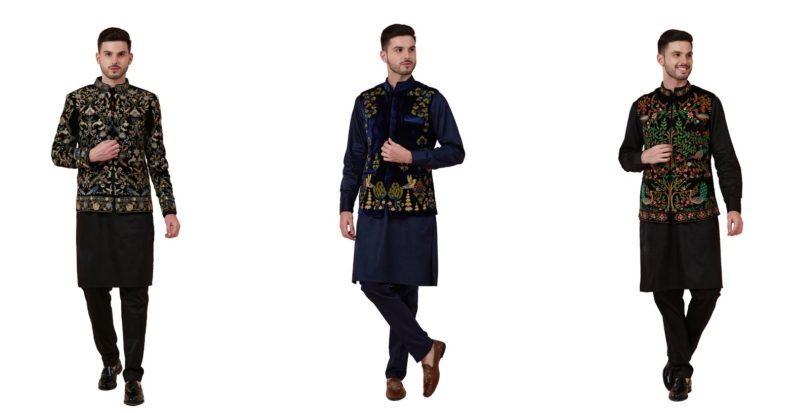
If the sherwani feels too ceremonial for your role, the bandhgala is the smartest alternative. This closed-neck jacket — sometimes called a Jodhpuri — reads as sharp, modern, and quietly powerful. It suits brothers who want to look formal without disappearing into tradition. A bandhgala in a deep jewel tone over a contrasting kurta or trouser is one of the most reliable looks for sangeet, engagement, or reception evenings.
The Indo-Western
For the brother who likes to push fashion a little, the Indo-western is where things get interesting. Think asymmetric drapes, structured jackets over kurtas, layered silhouettes, and unexpected detailing. These outfits photograph exceptionally well and feel current, making them ideal for cocktail nights and sangeet performances where you want energy and edge.
The Kurta Set and Nehru Jacket
Not every function calls for full formality. For daytime events — haldi, mehndi, intimate pujas — a well-cut kurta set, layered with a Nehru jacket, hits the sweet spot between effort and ease. Lightweight fabrics, softer colours, and minimal embroidery keep you comfortable through long ceremonies while still looking considered.
Coordinating with the Groom Without Clashing
The single most common styling mistake brothers make is either matching the groom too exactly or ignoring coordination entirely. The goal sits between those extremes.
A few principles make this simple. Stay in the same colour family but shift the shade — if the groom wears ivory, you wear champagne or soft beige rather than identical white. Mirror the level of formality but dial down the ornamentation, so your outfit complements the groom’s instead of echoing it. And when there are multiple brothers or close friends, pick one anchoring colour for the group and let each person vary the silhouette. This creates a cohesive family frame in photographs without anyone looking like a uniform.
Dressing for Each Function
Indian weddings unfold across several days, and each occasion has its own mood. Here is how to think about your wardrobe across the calendar.
For the haldi and mehndi, lean into lighter, breathable pieces — pastel kurtas, cotton-silk blends, and relaxed Nehru jackets. These functions are messy, joyful, and long, so prioritise fabrics that breathe and colours that play well in daylight.
For the sangeet and cocktail nights, this is your moment to bring drama. A jewel-toned bandhgala or an Indo-western ensemble photographs beautifully under evening lighting and gives you the freedom to move on the dance floor.
For the main wedding ceremony, formality peaks. A sherwani or a richly tailored bandhgala in a classic palette places you confidently within the family lineup while respecting the groom’s centre-stage moment.
For the reception, modern elegance rules. A structured jacket, a velvet Modi coat over a silk kurta, or a sharp bandhgala in a darker shade lets you close out the celebrations looking refined and self-assured.
Choosing Fabrics by Season
Fabric is the quiet decision that makes or breaks comfort. Winter weddings reward richer materials — velvet, wool blends, and heavier silks that hold structure and keep you warm during outdoor functions. Summer and monsoon celebrations call for the opposite: breathable cotton-silk blends, lighter linings, and looser cuts that survive long hours without leaving you uncomfortable. Matching your fabric to the season is one of the easiest ways to look genuinely put-together rather than merely dressed up.
Getting the Details Right
The outfit is the foundation, but accessories complete the picture. A well-chosen stole or pashmina shawl adds depth to a winter look, while a crisp pocket square sharpens an Indo-western jacket. Footwear matters too — handcrafted juttis or mojaris finish a traditional outfit, while polished formal shoes suit a contemporary bandhgala. Keep jewellery minimal and intentional; a single statement brooch or a refined watch does more than a cluttered stack of pieces ever will.
Fit Is Everything
No fabric, colour, or embroidery can rescue a poorly fitted outfit. A sherwani should sit snugly across the shoulders and chest while leaving room to move. Trousers and churidars should fall cleanly without bunching. If you are ordering a piece for the season, give yourself a comfortable runway — most fine ateliers recommend booking six to eight weeks before the wedding so there is time for fittings and adjustments. A made-to-measure or customised piece will always read more expensive than an off-the-rack outfit, simply because it sits correctly on your body.
A Final Word on Looking the Part
Being the brother at a wedding is a role you grow into across a single, intense stretch of days. You are the steady presence, the second face in the family portraits, and often the one keeping the celebration moving. Dressing for that role is not about outshining anyone — it is about showing up looking considered, comfortable, and quietly confident.
At Taroob, every piece is handcrafted in our Amritsar atelier, with patterns cut by hand and embroidery built stitch by stitch into the fabric. Customisation is available across the range, so you can tailor your look to coordinate with the groom and the wedding palette. When you are ready to put your wardrobe together for the season, explore the dedicated Brother Wedding Dress for Men collection and find the silhouette that fits both your role and your style.
Wedding season only comes around so often. Dress for it like it matters — because, for your brother, it absolutely does.