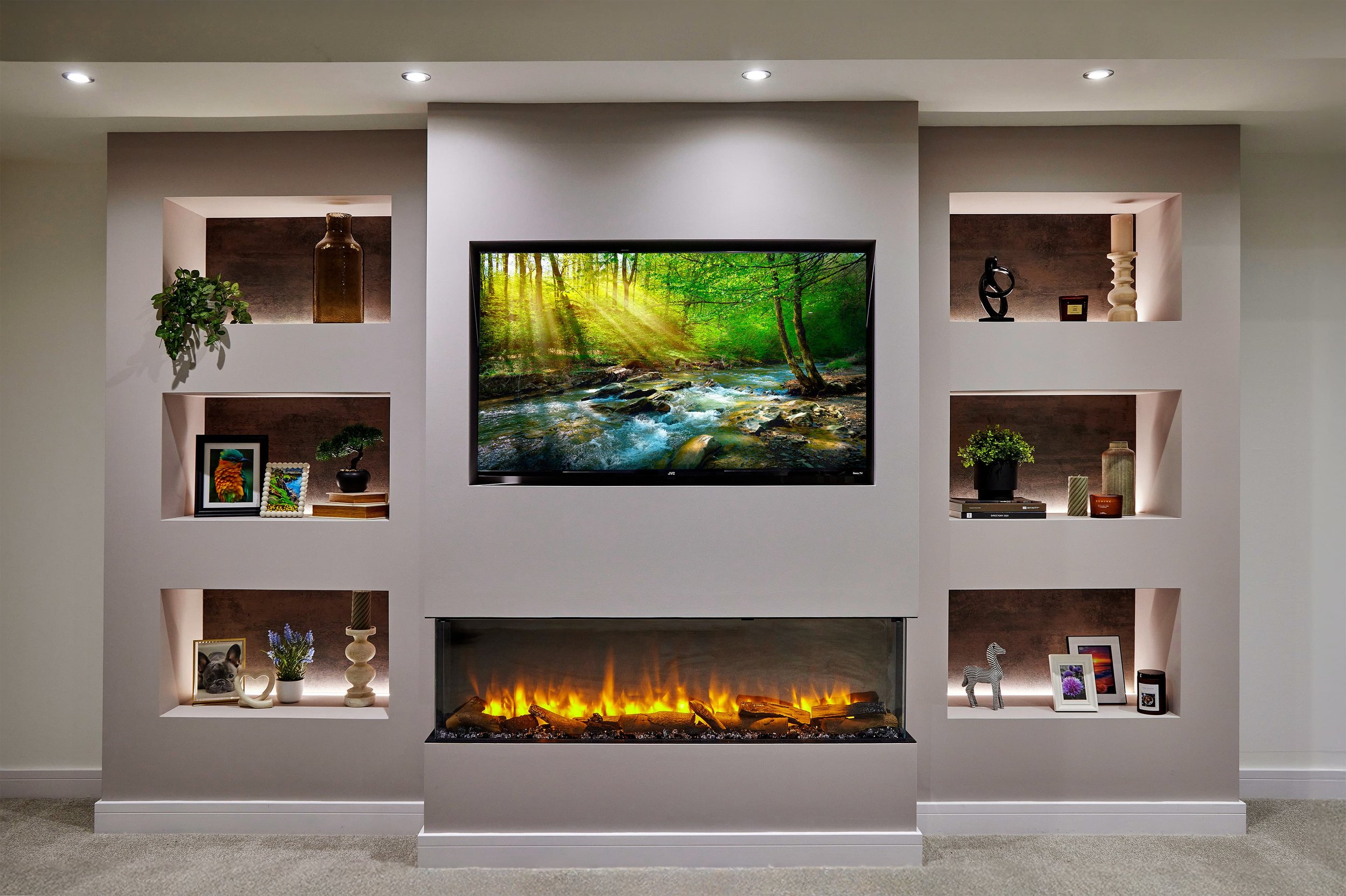
Open any interior feed at the moment and you will see them everywhere: sleek, built-in walls that swallow the television, the cables and the clutter, often wrapped around a slim electric fire. The media wall has gone from niche request to one of the most popular home-improvement projects of the past couple of years, and it is easy to see why.
Part of the appeal is purely practical. A well-designed media wall hides the tangle of wires, boxes and consoles that usually sit beneath a wall-mounted screen, and builds in shelving or alcoves for everything you actually want on display. Part of it is the atmosphere: integrating an electric fire gives a room a natural focal point and a sense of warmth without the maintenance of a traditional hearth.
The catch is that a media wall is only as good as its installation. These are not flat-pack projects. Recessing a television and fire into a stud or block wall involves planning the structure, heat clearances, ventilation and power and aerial runs before any plasterboard goes up.
When done well, the finish is seamless and the components stay cool and accessible. When done badly, you get overheating, awkward access and a feature that dates quickly. This is why most homeowners bring in specialists such as The Wright Heating, which handles media wall design and installation across the Blackpool area, rather than attempting it as a weekend job.
For anyone considering one, a few questions are worth asking up front. Is the fire genuinely suited to being built in? Is there adequate ventilation around the screen? Can the components be serviced or upgraded later without dismantling the wall? And does the design suit the proportions of the room, or will a large recess overwhelm a smaller space?
Get those right and a media wall earns its popularity: a tidy, warm, genuinely useful centrepiece that lifts the whole room. It is a reminder that the best home upgrades are often the ones that quietly solve everyday annoyances while looking the part.