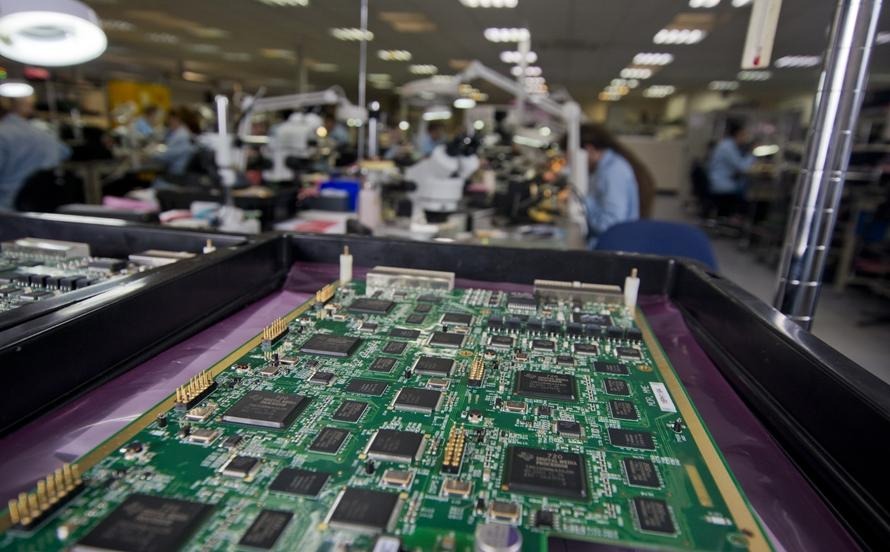
In the fast-paced electronics industry, bringing a new product from concept to market requires careful planning, testing, and validation. Before a design moves into full-scale production, engineers must ensure that the circuit functions correctly, meets performance requirements, and can be manufactured efficiently. This is where prototype PCB assembly plays a critical role. It serves as an essential step in product development, allowing companies to evaluate designs, identify potential issues, and make improvements before committing to mass production.
Whether developing consumer electronics, industrial control systems, medical devices, automotive products, or communication equipment, manufacturers rely on prototype PCB assembly to reduce risks and improve product reliability. By building and testing small quantities of assembled circuit boards, companies can validate their designs and accelerate the path to successful production.
What Is Prototype PCB Assembly?
Prototype PCB assembly is the process of assembling a limited number of printed circuit boards for testing, evaluation, and design verification purposes before full-scale manufacturing begins. These prototypes are used to confirm that the circuit design functions as intended and that all components interact correctly within the system.
Unlike high-volume production, prototype assembly focuses on flexibility and rapid turnaround rather than manufacturing efficiency. Engineers often use prototype boards to perform electrical testing, software development, functional validation, thermal analysis, and product optimization.
The prototype stage provides valuable insights into how the final product will perform under real-world conditions. It also allows development teams to identify design flaws early when modifications are less expensive and easier to implement.
For most electronic products, prototype assembly is a crucial milestone between design completion and production launch.
Why Prototype PCB Assembly Is Important
The cost of discovering a design flaw increases dramatically as a product moves through the development process. Identifying problems during mass production can lead to expensive delays, product recalls, and significant financial losses.
Prototype PCB assembly helps minimize these risks by providing an opportunity to evaluate the design before large-scale manufacturing begins. Engineers can test circuit functionality, verify component compatibility, and assess system performance under various operating conditions.
Prototypes also allow development teams to validate mechanical fit, thermal performance, and manufacturability requirements. This comprehensive evaluation helps ensure that the final product meets quality expectations and performs reliably in the field.
By addressing potential issues early, companies can reduce development costs and improve overall product success.
The Prototype PCB Assembly Process
The prototype assembly process begins with finalized design files, including Gerber data, bills of materials, assembly drawings, and other engineering documentation. Manufacturers review these files to identify potential manufacturing challenges and verify component availability.
Once the design is approved, the printed circuit board is fabricated according to project specifications. Depending on the complexity of the design, the board may include multiple layers, controlled impedance structures, or specialized materials.
After fabrication, solder paste is applied to component pads using stencil printing or manual techniques. Components are then placed onto the board either manually or through automated pick-and-place systems.
The board undergoes soldering, typically through reflow soldering for surface-mount components and wave soldering or hand soldering for through-hole devices. Following assembly, inspection and testing procedures verify assembly quality and electrical functionality.
The completed prototype is then delivered to the engineering team for evaluation and testing.
Key Benefits of Prototype PCB Assembly
One of the most significant benefits of prototype PCB assembly is design validation. Engineers can confirm that the circuit operates according to specifications before investing in larger production runs.
Prototyping also supports faster product development by enabling early software integration and functional testing. Firmware developers often require working hardware prototypes to begin coding and debugging activities.
Another major advantage is risk reduction. By identifying design weaknesses before production, companies can avoid costly manufacturing issues and improve product reliability.
Prototype assembly additionally helps optimize manufacturing processes. Engineers can evaluate assembly requirements, component placement strategies, and testing procedures to improve production efficiency.
These benefits collectively contribute to shorter development cycles and higher-quality final products.
Types of Prototype PCB Assembly
Prototype PCB assembly projects vary depending on product complexity, development objectives, and production plans. Some prototypes are created solely to verify basic circuit functionality, while others closely resemble the final production version.
Proof-of-concept prototypes are often built early in the development process to validate key design concepts and technical feasibility. These assemblies may use simplified layouts and temporary component selections.
Engineering prototypes are more advanced and closely match the intended production design. They are used for comprehensive testing, software development, and performance evaluation.
Pre-production prototypes represent the final stage before volume manufacturing. These assemblies are typically produced using the same materials, processes, and components that will be used in mass production.
Each type of prototype serves a specific purpose within the product development lifecycle.
Common Challenges in Prototype PCB Assembly
Although prototype PCB assembly offers many advantages, it can present several challenges. Component availability is one of the most common issues. Specialized or newly released components may have long lead times, making procurement difficult during development.
Design changes are another frequent challenge. Engineers often revise designs multiple times as testing reveals opportunities for improvement. Manufacturers must be flexible enough to accommodate these modifications quickly.
Assembly complexity can also increase when prototypes include fine-pitch components, Ball Grid Arrays, or high-density layouts. Specialized equipment and technical expertise may be required to achieve reliable assembly results.
Despite these challenges, the insights gained through prototyping make the process an essential part of successful product development.
Testing and Validation During Prototype Development
Testing is one of the most important activities associated with prototype PCB assembly. Once assembled, the prototype undergoes various evaluations to verify functionality and performance.
Electrical testing confirms that the circuit operates correctly and that all connections are functioning as intended. Functional testing evaluates system behavior under normal operating conditions.
Thermal analysis helps identify heat-related concerns that could affect reliability or performance. Mechanical testing verifies fit and compatibility within the final product enclosure.
Environmental testing may also be conducted for products intended for demanding applications. Temperature cycling, vibration testing, humidity exposure, and stress testing provide valuable information about long-term durability.
Comprehensive testing helps ensure that the final design is ready for production and real-world use.
How Prototype PCB Assembly Supports Design for Manufacturability
Prototype development is not only about validating functionality; it also provides an opportunity to evaluate manufacturability. Design for Manufacturability principles help ensure that the product can be produced efficiently and consistently at scale.
During prototype assembly, manufacturers may identify issues related to component spacing, solderability, thermal management, or testing accessibility. Addressing these concerns before production reduces manufacturing risks and improves yields.
Collaboration between design engineers and manufacturing specialists during the prototype phase often results in more efficient production processes and lower overall costs.
This proactive approach contributes to smoother transitions from development to volume manufacturing.
Choosing the Right Prototype PCB Assembly Partner
Selecting an experienced manufacturing partner is essential for successful prototype development. A qualified provider should offer rapid turnaround times, flexible production capabilities, and strong engineering support.
Manufacturers with advanced assembly equipment and comprehensive quality control systems can deliver reliable prototypes that accurately represent production-ready products. Their expertise helps identify potential design issues and improve manufacturability.
Effective communication is equally important. Close collaboration between engineering teams and assembly providers ensures that project objectives are clearly understood and achieved.
A strong prototype manufacturing partnership can significantly accelerate product development and improve final product quality.
Conclusion
Prototype PCB assembly is a critical stage in electronic product development that enables engineers to validate designs, identify potential issues, and prepare products for successful production. By building and testing small quantities of assembled circuit boards, companies can evaluate functionality, optimize performance, improve manufacturability, and reduce development risks before investing in large-scale manufacturing. From proof-of-concept validation to pre-production testing, prototypes provide valuable insights that contribute to higher-quality products and faster time-to-market. As electronic systems continue to become more advanced and competitive, working with a reliable prototype PCB assembly service provider can help businesses streamline development, enhance product reliability, and achieve greater success in the marketplace.