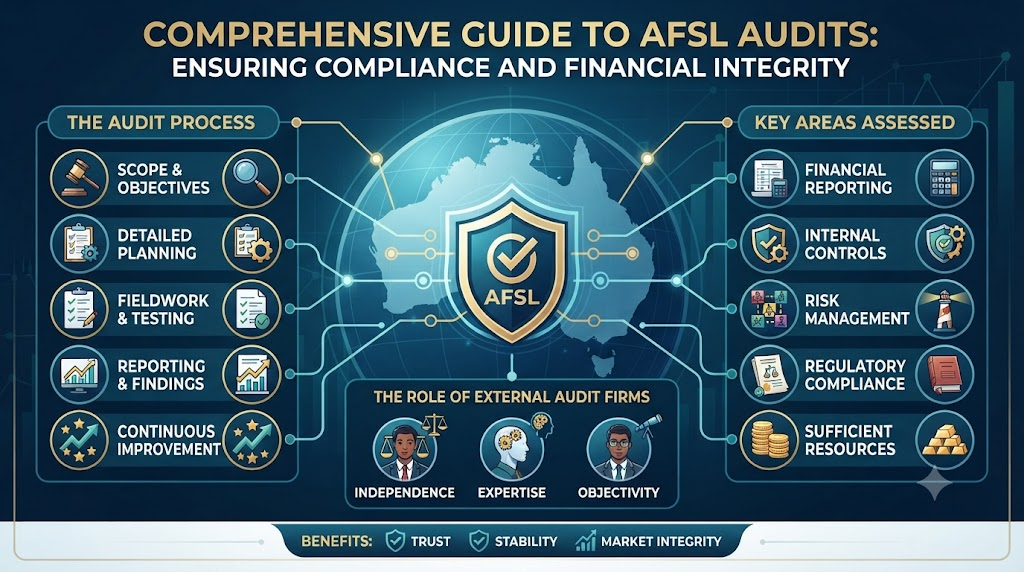
The Australian Financial Services Licence (AFSL) is a critical component in the financial landscape of Australia. It serves as a regulatory framework, ensuring that financial services are provided efficiently, honestly, and fairly. Given the importance of maintaining high standards of compliance and financial integrity, AFSL Audits play an essential role in upholding these standards.
Understanding AFSL Audits
An AFSL Audit is a systematic review of a licence holder’s operations. It involves assessing the entity’s adherence to licensing obligations, financial reporting standards, and other regulatory requirements. Auditors evaluate the effectiveness of internal controls, risk management structures, and ensure the provision of reliable financial information.
Objectives of AFSL Audits
The primary objective is to ensure compliance with the Corporations Act 2001 and other relevant regulations. AFSL audits verify whether the financial services provider maintains accurate records, meets financial requirements, and operates within the legal framework set by regulatory bodies.
Importance of Compliance
Compliance is not just a regulatory requirement but a crucial aspect of maintaining trust with clients and other stakeholders. Non-compliance can result in significant penalties, legal consequences, and reputational damage, which can adversely impact business operations.
The Audit Process
The process of conducting an AFSL audit involves several stages. Initially, the scope and objectives of the audit are defined. This is followed by a detailed planning phase where the auditors gather pertinent information about the licence holder’s operations and internal controls. Fieldwork is conducted where auditors test the controls and verify the accuracy of financial records.
Once tested, the auditors compile their findings and report on the effectiveness of the controls and compliance with regulations. Any deficiencies identified must be addressed to enhance compliance and operational effectiveness.
Key Areas Assessed During the Audit
AFSL audits typically assess several key areas. These include the evaluation of financial statements to ensure accurate reporting, assessment of risk management processes, and reviewing compliance with financial requirements such as maintaining sufficient financial resources.
Internal Controls and Risk Management
Auditors evaluate the licence holder’s internal controls and risk management practices. Effective internal controls are crucial for preventing and detecting errors or fraud, while robust risk management ensures the entity can respond to and mitigate potential risks.
Reporting and Continuous Improvement
The culmination of an AFSL audit is the preparation of a comprehensive report detailing findings and recommendations. This report is vital for the licence holder to understand and address any shortcomings in their compliance framework.
Continuous improvement is encouraged through implementing the auditors’ recommendations, leading to enhanced financial integrity and compliance standards.
The Role of External Audit Firms
External audit firms play a significant role in conducting AFSL audits. These firms bring an independent perspective and are equipped with expertise to ensure a thorough evaluation of compliance and financial practices. Their objectivity adds credibility to the audit findings.
Choosing the Right Audit Firm
Selecting the right audit firm is crucial for obtaining a comprehensive and unbiased audit. Factors to consider include the firm’s expertise in financial services, their understanding of regulatory environments, and their track record of delivering quality audits.
Challenges in AFSL Audits
Conducting AFSL audits can be challenging due to the complexity of financial regulations and the need for detailed understanding of both financial and operational aspects of the entity. Continuous updates to regulations also require auditors to stay informed to conduct effective audits.
The Future of AFSL Audits
The landscape of financial services is constantly evolving, with technological advancements and regulatory changes shaping the future of AFSL audits. Emphasis on digitalisation and enhanced data analytics tools is expected to transform the audit process, offering greater insights and efficiencies.
Conclusion
AFSL audits are an essential part of maintaining a robust financial services industry in Australia. They uphold the integrity of financial markets by ensuring that service providers operate within a framework of strict compliance and financial accountability. As the financial landscape evolves, the importance of comprehensive audits will continue to grow, safeguarding the interests of all stakeholders involved.