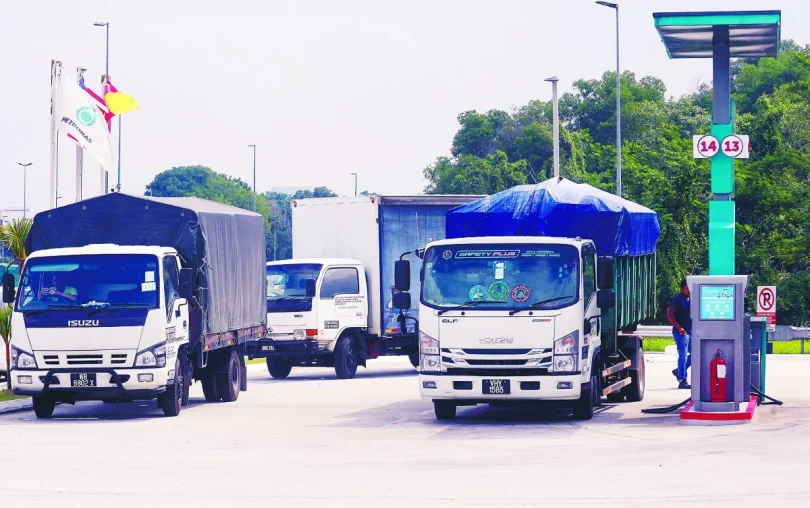

Australia moves on trucks. The country transported more than 235 billion tonne-kilometres of goods by road in recent years, and freight vehicles account for more than 20 per cent of all vehicles on Australian roads. Behind those numbers sit roughly 200,000 truck drivers, more than 47,000 road freight transport companies, and a transport and logistics sector expected to employ over 600,000 workers by the end of 2026. From iron ore leaving the Pilbara to fresh produce crossing the Nullarbor, from construction materials moving through Sydney’s motorway network to parcels reaching suburban doorsteps the same afternoon, the commercial vehicle is the indispensable workhorse of the Australian economy.
Buying a truck is nothing like buying a car. The financial commitment is larger, the variables are more complex, the regulatory environment is stricter, and the consequences of a poor decision ripple through your business for years. Whether you are a sole operator purchasing your first cab chassis, a growing contractor adding a tipper to your fleet, or a logistics company replacing a line of ageing prime movers, the process demands careful research, clear-headed analysis, and a genuine understanding of what the market is offering.
This guide is designed to help Australian buyers at every level navigate that process. It covers the current state of the market, the key decisions you will face, how to evaluate what you are being offered, the financial and regulatory considerations that shape every purchase, and the practical steps that separate a good buying decision from a costly mistake.
Understanding the Truck Sales Australia Market in 2026
The Australian commercial vehicle market is in a period of recalibration. After record-breaking volumes in 2023 and 2024, the industry pulled back in 2025, with 48,617 heavy vehicles sold across the year, a 9.5 per cent decline from the previous year’s peak. Despite the drop, 2025 still delivered the third-best sales year on record, and the improving trajectory through the second half of the year provided genuine optimism heading into 2026.
The first quarter of 2026 confirmed that buyer confidence is returning, though gradually. The market recorded 9,132 new deliveries across January, February, and March, with each month improving on the last. The heavy-duty segment showed steady recovery, with monthly volumes of 788, 977, and 1,240 units across the quarter. March’s year-on-year decline of 9.0 per cent was the most modest of any truck category, signalling that the correction may be bottoming out.
Several forces are shaping the market simultaneously. The transition to Euro 6 emission standards under ADR 80/04 is creating supply gaps for certain models as manufacturers phase out older-specification trucks and ramp up compliant replacements. Economic pressure on operators, driven by rising insurance, fuel, and labour costs, is making buyers more selective and analytical. And a wave of quality late-model used stock entering the market, partly from the closure of several high-profile transport operators in 2025, has given buyers more options at the pre-owned end of the spectrum.
For buyers, this environment creates opportunity. A softening new truck market means better availability and, in many cases, more competitive pricing. The used market offers strong alternatives at lower capital outlay. And the push towards cleaner, more efficient vehicles means that the trucks available today are measurably better on fuel, safety, and driver comfort than models from even five years ago.
How the Australian Market Is Segmented
Understanding how the market breaks down helps you focus your search on the right category for your needs.
Light-duty trucks sit at GVM ratings up to around 8 tonnes and serve urban delivery, trades, landscaping, and local freight. Isuzu has historically dominated this segment in Australia, with Hino, Fuso, and a growing roster of competitors vying for share. Automatic transmissions, improved cab comfort, and lower running costs have made light-duty trucks increasingly popular with businesses that need versatile urban workhorses.
Medium-duty trucks span roughly 8 to 15 tonnes GVM and cover a broader range of applications including larger delivery runs, regional freight, construction support, and specialised body work. This segment experienced the sharpest decline in early 2026, suggesting that mid-range buyers are being particularly cautious about capital expenditure in the current economic climate.
Heavy-duty trucks and prime movers sit above 15 tonnes GVM and are the backbone of linehaul freight, mining support, heavy construction, and road train operations. Competition in this segment is intense. Kenworth held the top position through Q1 2026, but Volvo closed the gap consistently month on month. Scania, DAF, Mercedes-Benz, Mack, and other manufacturers are all actively competing for share in what remains the most lucrative segment of the market.
Vans rated at 3.5 tonnes GVM and above represent the quiet achiever of the 2026 market. Last-mile delivery demand, driven by the ongoing growth of e-commerce and same-day delivery expectations, continues to support strong van sales even as other segments contract.
Deciding Between New and Used: The First Big Choice
Every truck buyer faces this question, and the answer depends on your specific operational and financial circumstances.
The Case for Buying New
A new truck gives you the latest in engine technology, safety features, fuel efficiency, and emissions compliance. You start with a full manufacturer’s warranty, a clean service history, and the ability to specify the exact configuration your operation requires. For businesses where uptime is critical, where the truck will accumulate high annual kilometres, or where contracts require compliance with the latest emission standards, buying new is often the most pragmatic choice.
The transition to Euro 6 under ADR 80/04 adds another dimension to the new-versus-used decision. New trucks built to Euro 6 specifications offer improved fuel economy and lower emissions. As government and corporate clients increasingly mandate Euro 6 compliance in tender documents and transport contracts, operating older trucks may limit your access to certain work. Buying new ensures you are positioned for the regulatory direction the industry is heading.
New trucks also benefit from the latest safety technology. Electronic stability control, advanced emergency braking, lane departure warning, adaptive cruise control, and improved cab structures are now standard or available on most current models. These features reduce accident risk, which can translate into lower insurance premiums and, more importantly, better protection for your drivers.
The Case for Buying Used
A well-chosen used truck can deliver excellent value. The purchase price is substantially lower than a new equivalent, depreciation in the early years has already been absorbed by the first owner, and a truck with 200,000 or 300,000 kilometres on a well-maintained engine still has the majority of its working life ahead of it.
The influx of late-model used stock into the Australian market following operator closures in 2025 has created particularly strong buying conditions for pre-owned trucks. Many of these vehicles have been maintained to fleet standards, come with documented service histories, and are available at prices well below replacement cost.
Used trucks make particular sense for applications where annual utilisation is moderate, where the truck will work in harsh environments that cause cosmetic wear regardless of age, where capital preservation is a priority, or where you need a vehicle quickly without waiting for a new build-to-order delivery.
The key to buying used successfully is thorough due diligence. Have the truck inspected by a qualified heavy vehicle mechanic. Review the complete service history. Check the Personal Property Securities Register for financial encumbrances. Inspect the chassis for signs of accident damage or structural repair. And verify the truck’s compliance plates, VIN, and registration details to ensure everything matches.
Matching the Truck to the Task
Australia’s vast geography and diverse industries mean that the right truck for one operation may be completely wrong for another. Taking the time to match the vehicle to your specific requirements is the single most important step in the buying process.
Define your payload requirements. The difference between a truck’s Gross Vehicle Mass and its tare weight determines the maximum legal payload. Every kilogram of excess tare weight is a kilogram of payload you cannot carry, which directly affects your revenue per trip. When comparing trucks, always check the tare weight of the specific configuration you are considering, including any body or equipment fitted, rather than relying on manufacturer brochure figures for the base chassis.
Assess your route profile. A truck running flat highway kilometres between capital cities has different demands from one climbing mountain passes, navigating tight urban streets, or operating on unsealed roads in regional and remote areas. Engine power, torque characteristics, cooling capacity, suspension type, and turning circle all need to be matched to the routes the truck will actually travel.
Consider driver comfort and retention. The truck driver shortage in Australia is real and persistent. Providing a comfortable, modern cab with air-suspended seating, effective climate control, good visibility, and intuitive controls is no longer optional for operators who want to attract and keep good drivers. Automated and automatic transmissions have become increasingly popular precisely because they reduce fatigue and broaden the pool of drivers who can operate the vehicle.
Factor in the body or equipment. For many applications, the body fitted to the chassis is as important as the truck itself. Tippers, curtainsiders, refrigerated bodies, water carts, crane installations, and specialised modules all add weight, change the centre of gravity, and affect how the truck handles and performs. Ensure the chassis is rated for the intended body and that the combination is compliant with Australian mass and dimension regulations.
Think about parts and service access. A truck from a well-represented brand with strong parts availability and service coverage across Australia will cost less to maintain and experience less downtime than a niche model with limited support. If your operations span multiple states or take you into regional areas, service network coverage becomes a critical selection factor.
Financing Your Purchase: Options and Considerations
The way you finance a truck purchase affects your cash flow, tax position, balance sheet, and long-term cost of ownership. Understanding the main options helps you choose the structure that best fits your business.
Chattel mortgage is one of the most common financing arrangements for truck purchases in Australia. The lender provides the funds and takes a mortgage over the vehicle as security. You own the truck from the outset, claim depreciation, and deduct interest payments. At the end of the term, the mortgage is discharged and you own the truck outright.
Finance lease arrangements see the lender purchase the truck and lease it to you for a fixed period. You use the truck as if you own it, but ownership sits with the lessor until you exercise a purchase option at the end of the lease. Lease payments are generally tax-deductible, and this structure can offer flexibility at the end of the term.
Operating lease is similar to a finance lease but typically structured so that you return the truck at the end of the term without taking ownership. This suits businesses that prefer to upgrade regularly and want to avoid carrying the asset on their balance sheet. However, the total cost over the lease term can be higher than outright purchase.
Hire purchase allows you to hire the truck with the option to buy it at the end of the agreement once all payments are made. You have use of the truck throughout the hire period, and payments may be structured with a balloon or residual amount at the end to reduce monthly outgoings.
The Australian Government’s permanent $20,000 instant asset write-off for eligible small businesses provides an immediate tax deduction for qualifying assets. While the threshold is modest relative to heavy vehicle prices, it can be applied to smaller equipment, accessories, and light-duty vehicles. Speak with your accountant about how to structure your purchase for maximum tax efficiency.
Registration, Compliance, and Regulatory Requirements
Every truck operating on Australian roads must comply with a framework of regulations that govern safety, emissions, mass, dimensions, and driver obligations. Understanding these requirements before you buy prevents costly surprises after the sale.
Australian Design Rules set the national standards for vehicle safety and emissions. The ongoing transition to ADR 80/04, which aligns Australian heavy vehicle emissions with Euro 6, is one of the most significant regulatory developments affecting the truck market. New models must comply, and over time, older pre-Euro 6 trucks may face restrictions on certain contracts and in certain jurisdictions.
National Heavy Vehicle Law applies in most Australian states and territories and is administered by the National Heavy Vehicle Regulator. It covers mass and dimension requirements, fatigue management, vehicle standards, and chain of responsibility obligations that extend beyond the driver and operator to include consignors, packers, loaders, and others in the transport supply chain.
Registration costs for heavy vehicles are calculated based on the vehicle’s GVM and the number of axles. These costs vary by state and territory and should be factored into your annual operating budget.
Fatigue management regulations require drivers to operate within prescribed work and rest hours. Electronic work diaries are becoming standard, and many modern trucks come with integrated telematics that support compliance monitoring. Ensure the truck you purchase is equipped with, or compatible with, the fatigue management systems your operation requires.
Calculating Total Cost of Ownership
The purchase price is only the opening chapter of a truck’s cost story. Smart buyers evaluate total cost of ownership across the vehicle’s intended working life, which provides a far more accurate picture of value.
Fuel is typically the single largest operating cost, often representing 30 to 40 per cent or more of total expenses. Differences of even one or two litres per hundred kilometres between competing models accumulate into thousands of dollars over a year. When evaluating trucks, ask for fuel consumption data that reflects real-world conditions similar to your own operation, not just manufacturer-quoted figures from idealised test cycles.
Maintenance and parts costs vary substantially between brands and models. Consider the scheduled service intervals, the cost of common consumables such as filters, brake components, and tyres, and the pricing and availability of major replacement items. A truck with cheaper parts but shorter service intervals may not be more affordable overall than one with higher parts costs but longer intervals.
Insurance premiums depend on the vehicle’s value, your claims history, the nature of your operations, and geographic factors. Obtain insurance quotes during the buying process rather than after, as premiums can vary significantly between vehicle types and between insurers.
Depreciation affects both your tax position during ownership and the amount you will recover when the truck is eventually sold or traded. Trucks from manufacturers with strong brand recognition, broad market acceptance, and good resale demand tend to depreciate more slowly, which improves total cost of ownership.
Downtime is the cost many buyers fail to quantify. Every day a truck is off the road for unplanned repairs, waiting on parts, or stuck in a service queue is a day it is not generating revenue. Reliability, parts availability, service network density, and the responsiveness of your maintenance provider all influence downtime and should be weighed heavily in your purchase decision.
Trends Shaping Australian Truck Purchases
Several developments are reshaping how Australians buy and operate trucks, and forward-thinking buyers will factor these into their decision-making.
The Euro 6 transition is creating a market within a market. Trucks built to the new standard offer genuine advances in emissions and, in many cases, fuel efficiency. However, supply constraints during the transition period mean that some models are experiencing extended delivery lead times. Buyers who need a truck quickly may need to consider available stock rather than build-to-order, or look at the used market for a near-term solution while waiting for their preferred new model.
Telematics and connected fleet technology have moved from optional extras to expected features. Modern telematics systems provide real-time data on vehicle location, fuel consumption, driver behaviour, engine diagnostics, and maintenance scheduling. For fleet operators, this data drives measurable improvements in efficiency, safety, and cost control. For owner-operators, it provides visibility into how the truck is performing and where savings can be found.
Whole-of-life cost thinking is replacing sticker-price purchasing. Operators are paying closer attention to fuel efficiency, downtime, residual values, and replacement cycles rather than simply choosing the truck with the lowest purchase price. This shift is driving demand for trucks that may cost more upfront but deliver lower total cost of ownership over a five-to-seven-year operating cycle.
Electrification and alternative fuels remain a long-term theme rather than an immediate market reality for most Australian operators. Infrastructure limitations, range constraints, and the vast distances inherent in Australian transport mean that diesel will remain the primary fuel for heavy-duty applications for the foreseeable future. However, urban and short-haul operations are beginning to explore electric and hybrid alternatives, and manufacturers are investing heavily in developing their zero-emission product lines for the Australian market.
If you are actively exploring options and looking for truck sales Australia has to offer, comparing available stock across different providers is a practical way to benchmark specifications, pricing, and value across the market.
A Practical Buying Checklist
Before you commit to a purchase, work through these steps to ensure you have covered the essentials.
Start by clearly defining your operational requirements. What will the truck carry, how far, how often, and in what conditions? Let these answers drive your specification rather than starting with a brand preference.
Set a realistic budget that includes not just the purchase price but all on-road costs, insurance, first service, body or equipment fitting, and any required accessories or modifications.
Research the brands and models that match your requirements. Speak with operators who run similar trucks in similar applications. First-hand experience from the field is worth more than any brochure or specification sheet.
If buying used, invest in a professional pre-purchase inspection. Check the PPSR for encumbrances. Verify the truck’s identity against VIN and compliance plates. Review the service history in detail.
Obtain at least two or three written quotes and compare them on a like-for-like basis. Ensure each quote covers the same specifications, warranty terms, delivery inclusions, and after-sales support.
Arrange finance and insurance before finalising the purchase. Conditional approval gives you budget clarity and negotiating confidence.
Confirm parts and service availability in the areas where the truck will operate. A great price on a truck with limited local service support is not a great deal.
Plan your maintenance strategy from the outset. Identify service providers, establish a preventive maintenance schedule, and stock critical spare parts if your operation runs in remote areas.
Frequently Asked Questions
What are the most popular truck brands sold in Australia?
The Australian market features a diverse range of manufacturers. In the light-duty segment, Isuzu has historically led sales, followed by Hino and Fuso. In the heavy-duty segment, Kenworth, Volvo, and Scania are among the strongest performers, with DAF, Mercedes-Benz, Mack, and several other brands actively competing. The best brand for your situation depends on your specific application, required specifications, local parts and service availability, and total cost of ownership rather than sales rankings alone.
Is it better to buy a new truck or a used truck in 2026?
Both options have merit depending on your circumstances. New trucks offer the latest technology, full warranty coverage, Euro 6 compliance, and the ability to specify exactly what you need. Used trucks offer lower capital outlay, reduced depreciation exposure, and in the current market, access to quality late-model stock from recent fleet disposals. The right choice depends on your budget, annual utilisation, the importance of having the latest emission and safety standards, and how long you plan to keep the vehicle.
How much should I expect to pay for a new truck in Australia?
Prices vary enormously depending on the truck category and specification. A light-duty cab chassis may start from around $50,000 to $70,000 for basic configurations. Medium-duty trucks typically range from $80,000 to $150,000. Heavy-duty prime movers can range from $200,000 to $400,000 or more, depending on the brand, engine specification, cab configuration, and included features. These are base chassis prices and do not include body or equipment fitting, registration, insurance, or other on-road costs.
What does the transition to Euro 6 mean for truck buyers?
The introduction of ADR 80/04 aligns Australian heavy vehicle emission standards with Euro 6 requirements. New trucks must meet these standards, which deliver lower particulate and nitrogen oxide emissions. For buyers, this means the new trucks entering the market are cleaner and, in many cases, more fuel-efficient. However, the transition has created supply constraints for some models during the changeover period. It also has implications for the resale value and contract eligibility of older, pre-Euro 6 trucks over time.
What financing options are available for truck purchases in Australia?
The most common options include chattel mortgage, finance lease, operating lease, hire purchase, and commercial loans. Each has different implications for ownership, tax treatment, cash flow, and balance sheet impact. Chattel mortgage is popular because it provides immediate ownership and allows depreciation and interest deductions. The best structure depends on your financial position, tax circumstances, and how long you intend to keep the truck. Consulting with your accountant and a commercial finance broker before committing is strongly recommended.
This guide is intended for informational purposes only. Truck buyers in Australia should always seek independent professional advice regarding financing, insurance, regulatory compliance, and vehicle suitability before making a purchase decision.