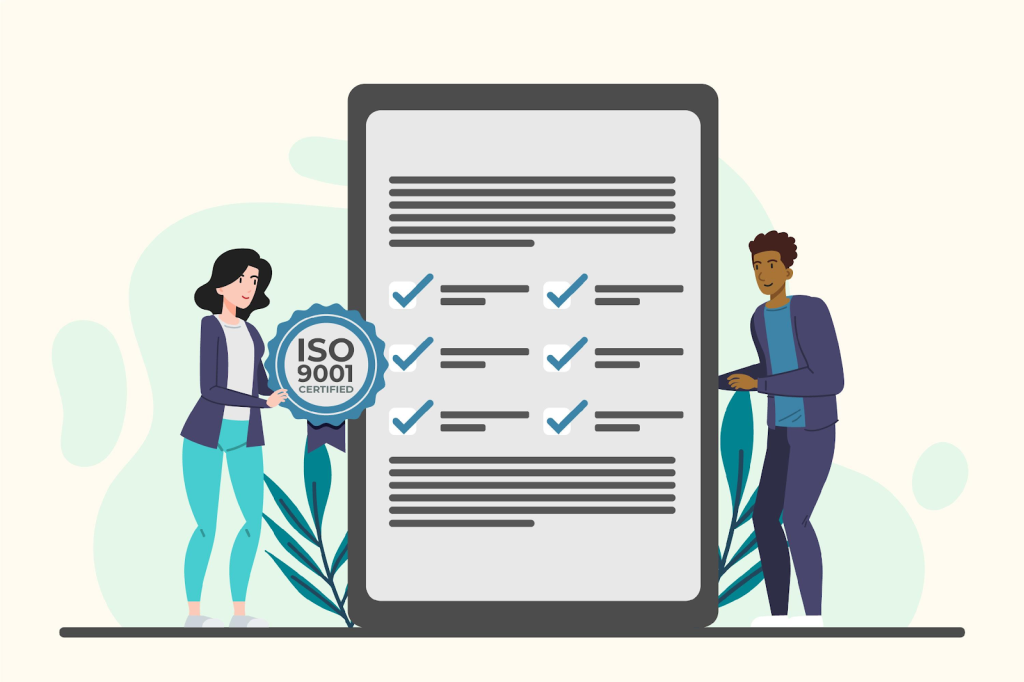
As new technologies launch, the risks associated with information security are constantly increasing and evolving. This is where globally recognized bodies like the International Organization for Standardization (ISO) come into play, helping businesses meet certain standards for quality, safety, and efficiency. In this blog post, the difference between the role of lead implementer vs the lead auditor will be highlighted, focusing on how their job role and responsibilities are distinct from each other.
ISO 9001 is a globally-recognized standard for quality management systems (QMS) that determines criteria for businesses maintain quality standards. A lead auditor is a person responsible for leading a company’s audit team. On the other hand, a lead implementer is in charge of a business’s ISO projects. Both of these individuals have their predetermined roles and responsibilities. Here, we will learn the difference between them.
Who is a Lead Implementer?
A lead implementer oversees the ISO project for a business. Furthermore, they ensure that the security procedures and guidelines are followed properly. A lead implementer helps an organization implement and manage procedures on systems established on the ISO standards.
What are the Responsibilities of a Lead Implementer?
- The lead implementer takes charge of the ISO project of an organization.
- They are responsible for making crucial decisions, such as setting the scope of the ISMS (Information Security Management System) and ensuring that the standard’s requirements are properly addressed.
- The lead implementer ensures that the employees have a strong knowledge of ISO 9001’s compliance requirements and comply with them. They can also assist in the internal audit program and management reviews within the company.
Why Do Individuals Look for the Lead Implementer Certification Course?
An ISO 9001 Lead Implementer Certification Course can develop your proficiency in designing, implementing, and managing an ISMS more effectively. By getting knowledge about fundamental ISMS principles and concepts, an individual interested in a lead implementer course can learn how to plan, implement, measure, and manage an ISMS based on the audits. This is a highly-recommended credential for project managers, consultants, and professionals for implementing ISMS.
Who is a Lead Auditor?
The main role of the lead auditor of a business is to lead the audit team during an ISO management systems audit. Also, they assess and check the effectiveness of the disciplinary action implemented by examining the corrective action plan and the procedure.
What are the Responsibilities of a Lead Auditor?
Day-to-day audits are the key responsibilities of a lead auditor. Other responsibilities include:
- A lead auditor prepares the audit plan, delivers meetings, and makes the audit report.
- The lead auditor is also responsible for maintaining the communication between all the auditees and correspondents before and after the audit, ensuring the requirements are understood by the auditees.
- The lead auditor is also responsible for collecting audit notes from the audit members for inclusion in the audit report.
Why is the Lead Auditor Certification Course an Effective Option?
The ISO 9001 Lead Auditor Certification course covers all the ISO 9001 foundational concepts. This credential helps individuals audit a management system and manage a team of auditors using predetermined audit principles and techniques.
The certification is a valuable addition for ISMS auditors and information security management advisors. The ISO 9001 Lead Auditor Certification also enables the course participants to learn thoroughly about the information security systems aligned with the ISO standards.
Key Differences Between the Lead Auditor and the Lead Implementer
| Lead Auditor | Lead Implementer |
| The lead auditor is at the top of the audit team of an organization. | The lead implementer supervises the ISO project of an organization |
| The lead auditor prepares the audit plan, conducts meetings, and submits the audit report. | The lead implementer assists in establishing an organization’s internal audit program and management reviews. |
| They take the initiative of opening and closing meetings of the audit team. | They make prominent decisions, such as making the team understand the scope of ISMS. |
| A lead auditor thoroughly evaluates the production procedures to ensure that they adhere to the quality standards. | The lead implementer assesses that the organization’s compliance with ISO 9001 is well understood. |
| A lead auditor has exceptional problem-solving and analytical skills. | On large extent, the lead implementer makes critical decisions. |
Table: The Differences of Responsibilities Between the Lead Auditor and Lead Implementer
Wrapping Up
If you want to understand the implementation procedure of information security, the ISO 9001 Lead Implementer Certification is perfect for you. On the other hand, the ISO 9001 Lead Auditor Certification Course will help you get the knowledge with skills to perform first, second, or third-party audits of the ISO management systems. These ISO certifications will help you to enhance your proficiency in different security management sectors, such as risk management, business continuity management systems, and ISMS.
Upgrade Your Skills Through ISO Certifications!
Want to Upgrade Your Career in the field of information security and management? Take ISO certification courses to enhance your skills and efficiency in the sector.